Once the type and head are settled, the last decisions are height, strength and the legs themselves. Get these right and the tripod disappears; get them wrong and it fights every shot.
Height
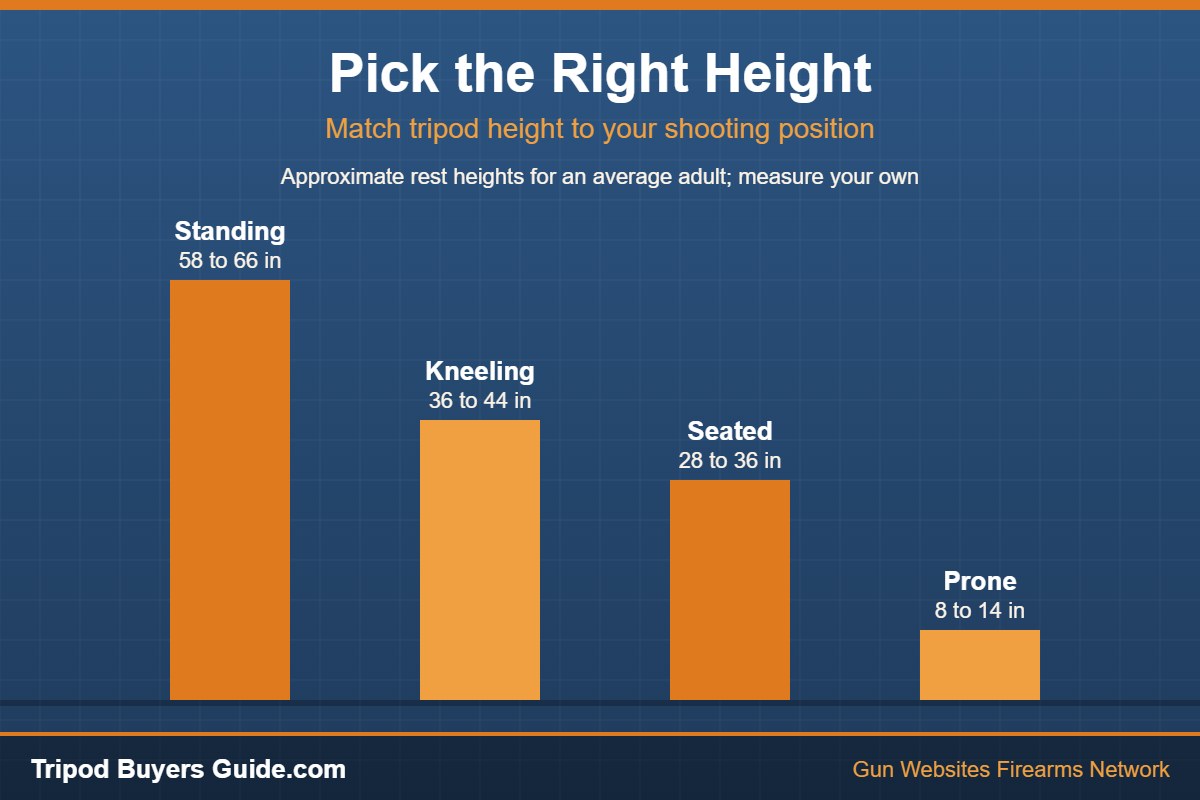
Measure the height you need in your tallest position. Standing shots need a tripod that reaches roughly chin height with the head and gun on top, without cranking the center column all the way up. Low leg-angle stops let the same tripod work seated and prone.
Load rating
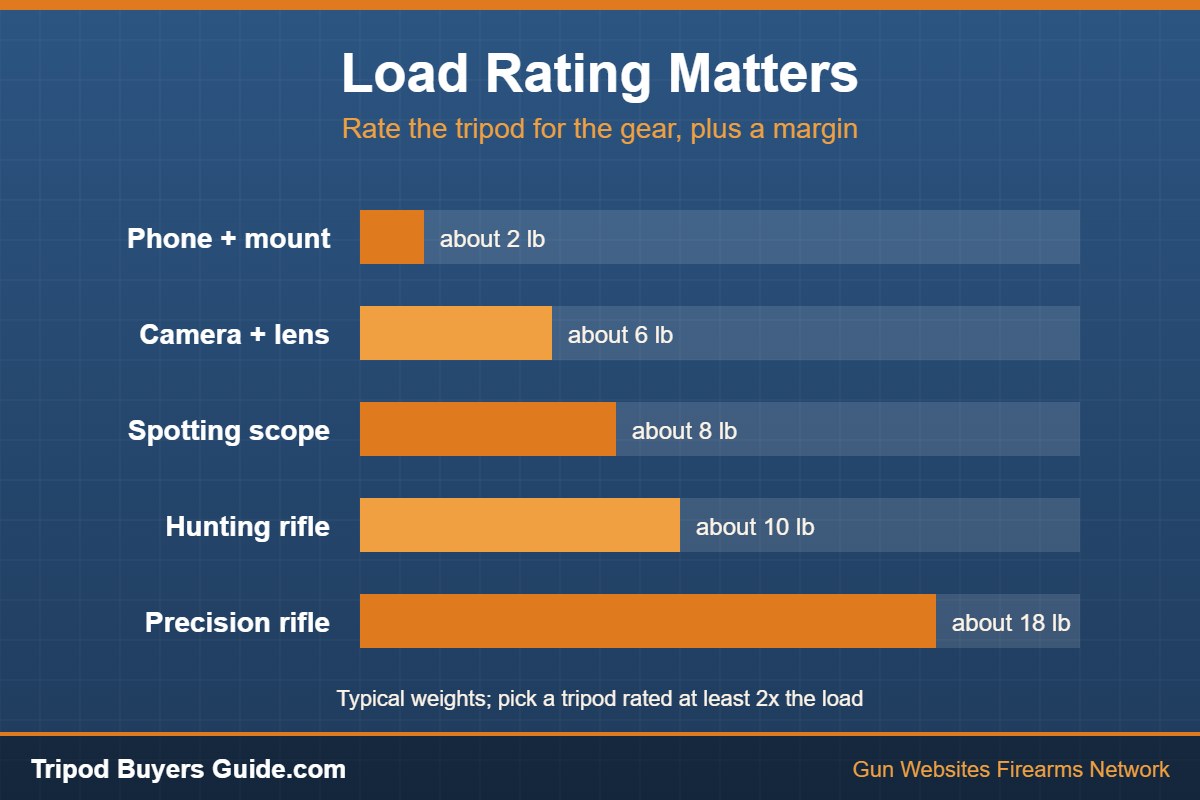
Add up the weight of the rifle, optic and anything else on top, then pick a tripod and head rated at least twice that. A heavy precision rifle needs a much stronger system than a phone or small camera.
Legs and materials
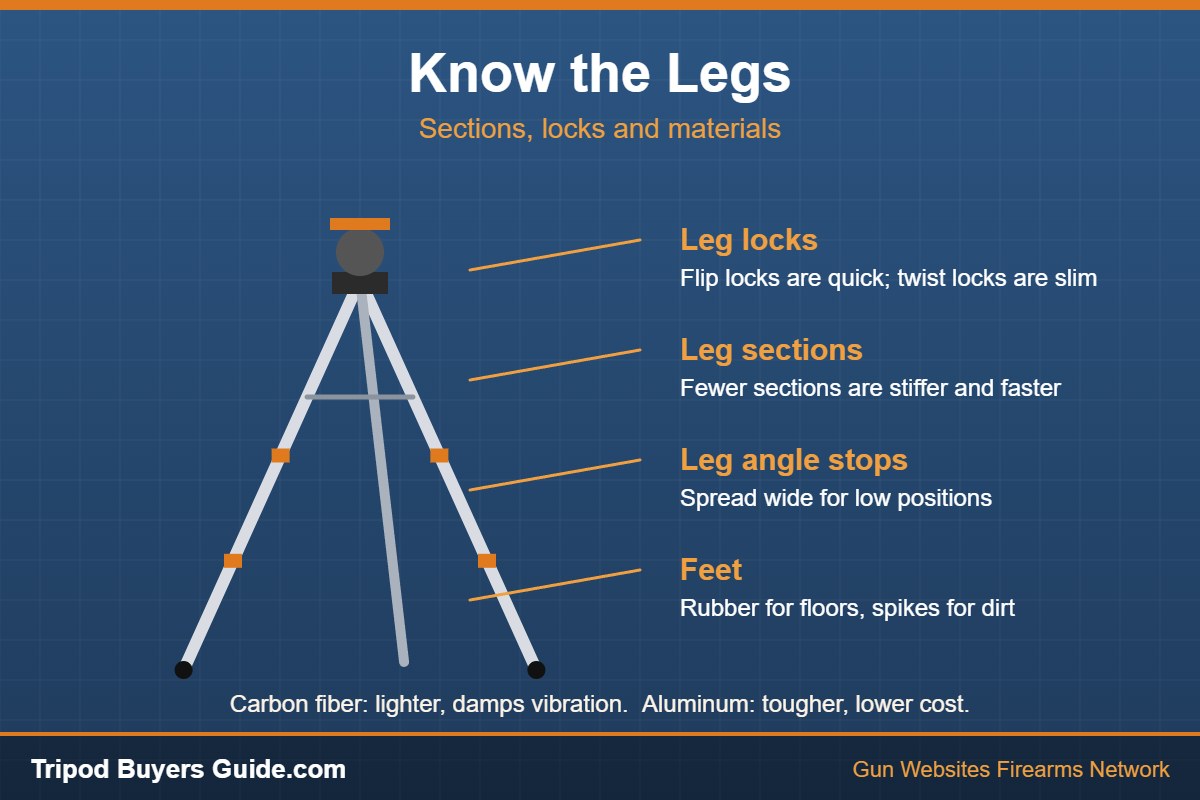
Fewer leg sections are stiffer and faster to deploy; more sections pack smaller. Flip locks are quick with gloves, twist locks are slimmer and snag less. Carbon fiber is lighter and damps vibration; aluminum is tougher and costs less.
Quick checklist
- Reaches your tallest position without the center column fully raised.
- Rated for at least twice the weight on top.
- Leg locks you can work with gloves on.
- A head or saddle that fits your rifle or gear.
- Light enough that it actually comes along.
Have more questions? See the Tripod F.A.Q.
Shop tripods and supports
Affiliate links. See the Affiliate Disclosure.